The Great Migration
Wildebeest Migration Safari in the Serengeti
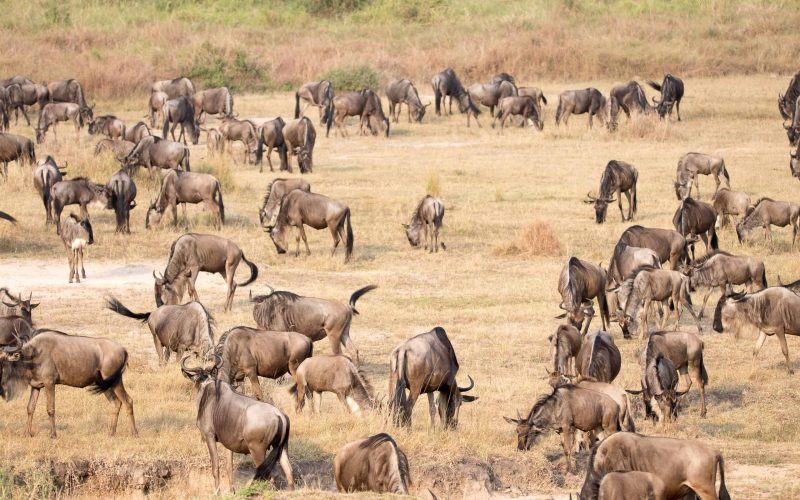
Every year, roughly two million wildebeest, zebra and gazelle move in a continuous circuit across the Serengeti and into Kenya’s Maasai Mara, following rain and fresh grass in a cycle that has been repeating for longer than anyone has been here to witness it. It is the largest overland migration of animals on earth, and nothing quite prepares you for the scale of it.
The movement never fully stops, but it changes character through the year in ways that are worth understanding before you book. January and February bring the calving season to the southern Serengeti and Ndutu, where thousands of wildebeest are born within a matter of weeks. The plains fill with newborns finding their feet within minutes of birth, and every predator in the area knows exactly what that means. Cheetah, lion, hyena and wild dog converge on the same ground. It is relentless, raw, and unlike anything else on the northern circuit.
By July the herds have pushed north, and from July through October the Mara River crossings happen. Thousands of animals gather at the bank, holding back, the pressure of those behind building until something tips and the herd commits. What follows is noise, water, dust and chaos, crocodiles surging from below, animals scrambling up the far bank, some making it, some not. People who have been on safari many times say the crossings are still the moment that stays with them longest.
Knowing where the herds are at any given time requires current information, not just a calendar. The Migration follows patterns but not a fixed timetable. A crossing that was happening yesterday may not happen today. We track conditions closely, maintain contacts in the field, and build itineraries around where the action actually is when you travel. Getting the timing right is the difference between watching the Migration and being inside it.